
Home Addition vs. Moving in Pittsburgh: When Each Makes Sense
The real financial and lifestyle math for South Hills homeowners deciding whether to add on to the home they have — or trade up to a new one. Pittsburgh-specific 2026 numbers, no contractor or realtor sales pitch.
If you live in the South Hills and the house is starting to feel small — the kids share a room, the dining room doubles as a homework station, the kitchen was built for the family who lived there in 1968 — you've probably had this conversation: do we add on, or do we move?
In a different market, the answer would be obvious. In 2026, with mortgage rates where they are and South Hills home prices where they are, the math is not what it used to be. Some families absolutely should move. Many more probably shouldn't — even if their current house "doesn't quite work" — and they don't realize how much the move will actually cost them until they're three months into a listing and a bidding war.
This guide is the honest math. Pittsburgh-specific numbers, no contractor sales pitch, no realtor sales pitch — just the framework for figuring out which side of the question you're really on.
Quick Take: In 2026 South Hills, a home addition typically pencils out better than moving when (1) you're already in the neighborhood you want long-term, (2) you have a mortgage rate under ~5%, and (3) the house has good bones. Moving usually wins when the lot, layout, or location is fundamentally wrong — no addition fixes a steep driveway or the wrong school district. The financial gap is wider than most homeowners realize, mostly because of the hidden cost of trading a low-rate mortgage for a current-rate one.
What does a Pittsburgh home addition actually cost?
Let's start with the addition side of the equation. In the South Hills market, additions typically run:
- Standard grade: $136–$180 per square foot
- Mid-range: $180–$230 per square foot
- Premium / high-end: $230–$271+ per square foot
For a typical project, that translates to:
- Bump-out (~150 sq ft): $30,000–$50,000
- Room addition (~400 sq ft): $80,000–$180,000
- Primary suite addition (~600 sq ft, including bath): $200,000–$400,000
- Second-story addition (~1,000 sq ft): $250,000–$500,000+
For the full cost breakdown by addition type, see our Pittsburgh home additions guide.
One important framing: at resale, a well-executed South Hills addition typically returns 60–75% of cost. That is NOT a positive return — it's a partial recoupment. But here's the key: you use that square footage for years before you ever sell, and the recoupment plus those years of daily-use value usually beats the alternative once you factor in everything moving costs.
What does moving actually cost? (The full picture, not just the new mortgage)
Most homeowners think of moving as "sell the old house, buy the new one." The actual cost picture is much wider. In the South Hills market in 2026:
Direct transaction costs
- Realtor commission (selling): 5–6% of sale price. On a $500K home, $25,000–$30,000.
- Closing costs (selling): 1–2% of sale price. Roughly $5,000–$10,000.
- Closing costs (buying): 2–4% of purchase price. On a $700K next home, $14,000–$28,000.
- Title, transfer, inspection, attorney fees: ~$3,000–$6,000 combined.
- Moving company: $3,000–$8,000 for a typical South Hills household.
Total direct transaction cost on a typical $500K → $700K move: roughly $50,000–$80,000 out of pocket, before you've changed a single light fixture in the new house.
The mortgage rate-lock penalty (the big one)
This is the cost most families dramatically underestimate. If you locked a mortgage at 3.0%–4.5% between 2019 and 2022, that rate is a financial asset worth tens of thousands of dollars. Trading it for current rates (~6.5%–7.5% as of 2026) means:
On a $400,000 mortgage balance, the difference between a 3.5% rate and a 7% rate is roughly $850 per month in additional interest. Over 30 years, that's $300,000+ of additional interest cost. Even if you only stay 7 years in the new house, you've paid roughly $70,000 in extra interest you wouldn't have paid by staying.
For most South Hills families who bought or refinanced in the 2019–2022 window, this single factor often wipes out the financial case for moving unless the new house solves a problem the old one fundamentally can't.
Property tax and insurance creep
Moving to a more expensive home in a stronger market also bumps your annual property tax and homeowner's insurance. In South Hills municipalities, expect combined property + school tax of roughly 1.8%–2.5% of assessed value. A move from $500K to $700K means roughly $4,000–$5,000 per year in additional tax — money you'd carry every year you live in the new house.
The numbers, side by side
Pricing a $250,000 primary suite addition against a $500K → $700K move:
- Stay and add on: $250,000 project cost. Recoup ~$175,000 at sale eventually. Net cost of the extra space: ~$75,000 — spread across years of daily use.
- Move up: $60,000+ in transaction costs immediately, plus ~$850/month in additional interest ($10,000/year), plus ~$4,000/year in higher taxes. Year-one cost of moving: ~$74,000. Over 7 years before any sale: ~$160,000+ above what you'd have paid by staying.
For most families in this scenario, adding on is roughly half the lifetime cost of moving — and you keep the school district, the neighborhood, the network of friends, and the daily routines that took years to build.
What does the lifestyle math look like?
Money isn't the whole picture. Here's the honest disruption comparison.
Addition timeline (typical):
- Design + permitting: 2–4 months
- Construction: 4–8 months on-site
- Total elapsed: ~6–12 months
- Disruption: significant in the directly-affected rooms; manageable in the rest of the house. Many families stay in place through the build with creative scheduling.
Move timeline (typical):
- House prep + listing: 1–2 months
- Sale + searching for the next home: 2–6 months (longer in tight markets)
- Close + move + unpack + settle: 1–2 months
- Renovations to make the new home "ours": 1–6 months
- Total elapsed: 6–12 months — roughly the same as an addition, but with more emotional volatility (bidding wars, contingencies, packing twice).
The honest point: both options are roughly equivalent in disruption duration. The real choice isn't "live in chaos for a year vs. start fresh." It's "live in your renovated home a year from now, or live in someone else's old house a year from now."
When does adding on make more sense?
Adding on usually wins when:
- You love the neighborhood. You'd be making the move just for square footage, not for location. Mt. Lebanon, Upper St. Clair, Peters Township — these are not neighborhoods you abandon casually.
- The school district matters. You're not willing to gamble on whether the next district is as good as the current one.
- Your mortgage rate is under 5%. You'd be losing too much rate value by trading it for current rates.
- The house has good bones. The foundation is sound, the major systems are reasonable, and the layout has logical expansion paths. (A 1960s split with no expansion-friendly orientation is harder than a center-hall colonial with a clear back-of-house expansion zone.)
- You're in this house long enough to amortize the investment. Adding on makes clean economic sense over 5+ years of use. Under 3 years, the math gets tighter — though even then, the addition often beats moving once transaction costs are factored.
- The family connection to the house has weight. Kids' growth marks on the doorframe, the tree planted when you moved in, the neighbors who watch your kids — these don't show up in a spreadsheet, but they're real and they count.
When does moving make more sense?
Moving usually wins when:
- The lot is the problem. No addition fixes a steep driveway, an unsafe street, a flood-prone backyard, or a lot too small to accommodate the family's outdoor needs.
- The location is wrong for the next chapter. Job change, school district change, aging-in-place plans, distance from extended family.
- The house has fundamental structural issues. Settling foundation, asbestos throughout, knob-and-tube electrical, a severe water-damage history. Sometimes the building tells you it's done.
- The expansion you'd need is bigger than the house itself. If you'd need to add 1,500 sq ft to a 1,200 sq ft house, you're essentially building a new house attached to an old one — and the cost-benefit shifts.
- You're underwater on something other than money. The mental and emotional cost of staying in a house that doesn't fit can outweigh the financial cost of moving. This is real and shouldn't be dismissed by a contractor or a realtor selling you something.
Five honest questions to ask yourself
Before you spend $60,000 on moving costs or $250,000 on an addition, sit with these five questions for a week. Don't talk to a contractor or a realtor yet. Just answer honestly:
- If I had to commit to staying here for the next 10 years, would I still want this house — just bigger? If yes, you're an addition candidate. If no, you might be moving toward a move.
- What specifically about my current house can't be fixed with renovation or addition? Be precise. "Doesn't feel right" isn't an answer. "The lot floods every spring and there's no path to fix the grading" is.
- What's my current mortgage rate, and what would I be paying at today's rates on a more expensive house? Calculate the actual monthly delta in dollars. The number is usually bigger than people expect.
- How would my kids feel about leaving — and is the new neighborhood actually better, or just newer? Sometimes a family needs the move. Sometimes it's the parent's restlessness mistaken for a family need.
- If I'm honest, am I trying to "solve" something that's not really about the house? Renovations and moves both get blamed for bigger life problems they can't fix. If you're three months from a job change, an empty-nest transition, or a major relationship shift, wait. Make the housing decision when life is settled.
What about staying and remodeling — without adding on?
For a meaningful subset of South Hills homeowners, the right answer is neither "add on" nor "move" — it's remodel what you already have. A 1,800 sq ft house with a poor layout often functions like 2,200 sq ft after an open-up: removing the wall between kitchen and dining, finishing the basement for a family room, converting a small front room into a home office.
This is often the cheapest path — a $50,000–$120,000 remodel that unlocks 30% more usable space without adding a single square foot. Worth costing out before you commit to either of the bigger paths.
For specifics, see our renovation ideas guide and basement finishing in Pittsburgh.
How to pressure-test your decision
Once you've worked through the five questions above and you think you have an answer, three more practical steps:
- Get a real number on the addition. Don't trust online estimators alone. Use our renovation investment calculator to see a starting range, the cost breakdown, and the equity it adds back — then talk to one or two design-build firms about your specific house and scope.
- Get a real number on the move. Talk to a Pittsburgh-area realtor about what your current house would actually sell for, what the next house would actually cost, and the full closing-cost spread. Don't accept hand-waved "you'll be fine" numbers.
- Sit with both numbers for two weeks before deciding. The pressure to act fast on either side is usually a marketing pressure, not a real one.
Renovating a home you already love is one of the highest-leverage uses of money a family can make. So is moving when staying is genuinely wrong. The mistake is doing either reactively. The five questions above — and the real numbers, not the gut numbers — are how you avoid that.
If you'd like to walk through your specific situation with us — no sales pressure, just an honest read on the addition side of the math — schedule a consultation. We'll tell you straight whether adding on is the right call for your house, or whether you're better off looking at the listings.
Our additions renovation page →
Dormers, rear additions, second-story adds — engineered and permitted in-house.

Jordan Kelly is a co-owner and co-founder of Integrated Contracting & Renovations. A Pittsburgh native with an accounting degree from Saint Francis University, he has spent more than 15 years in Pittsburgh real estate and focuses on the numbers behind a renovation — what projects cost, what they return, and how homeowners finance them.
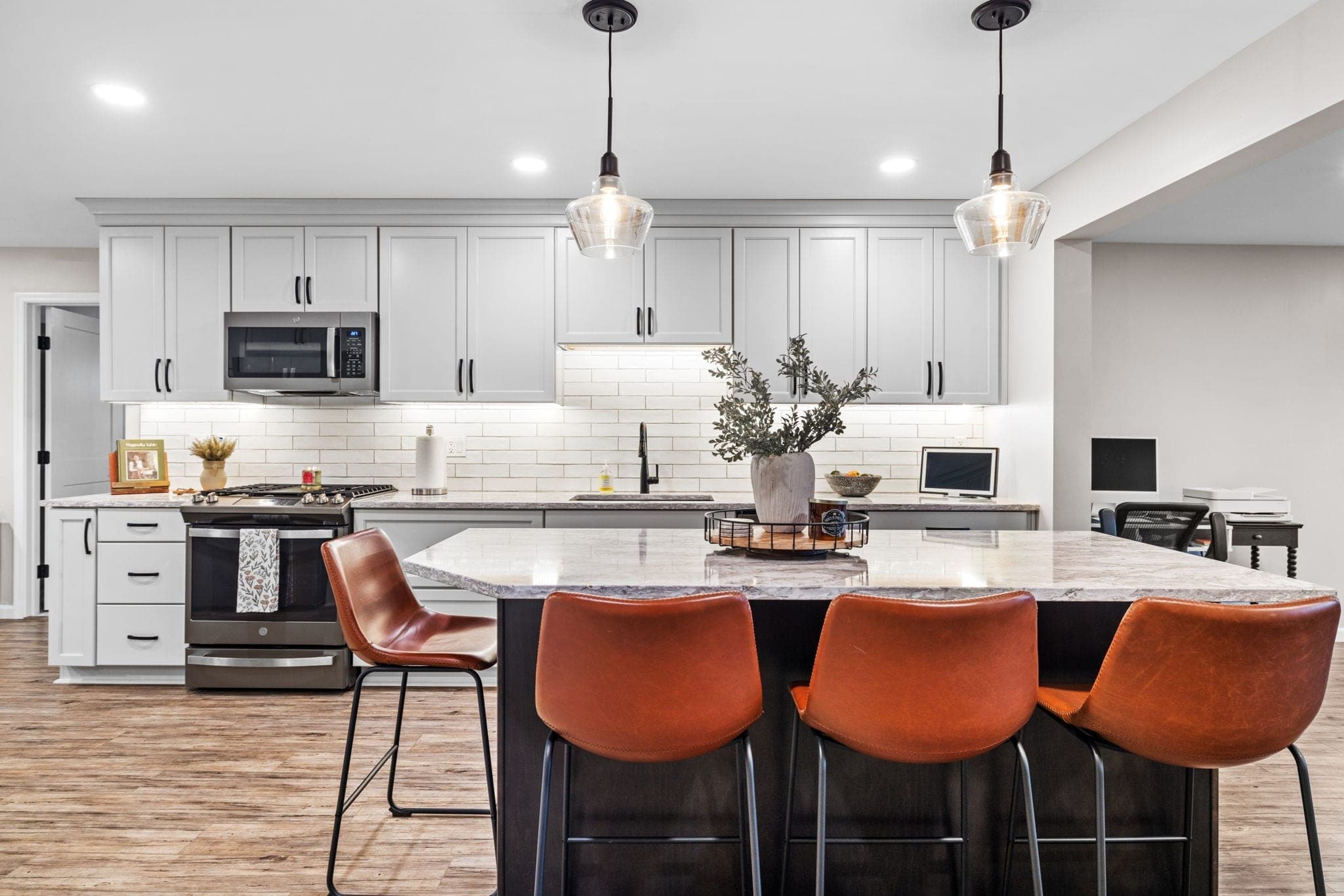
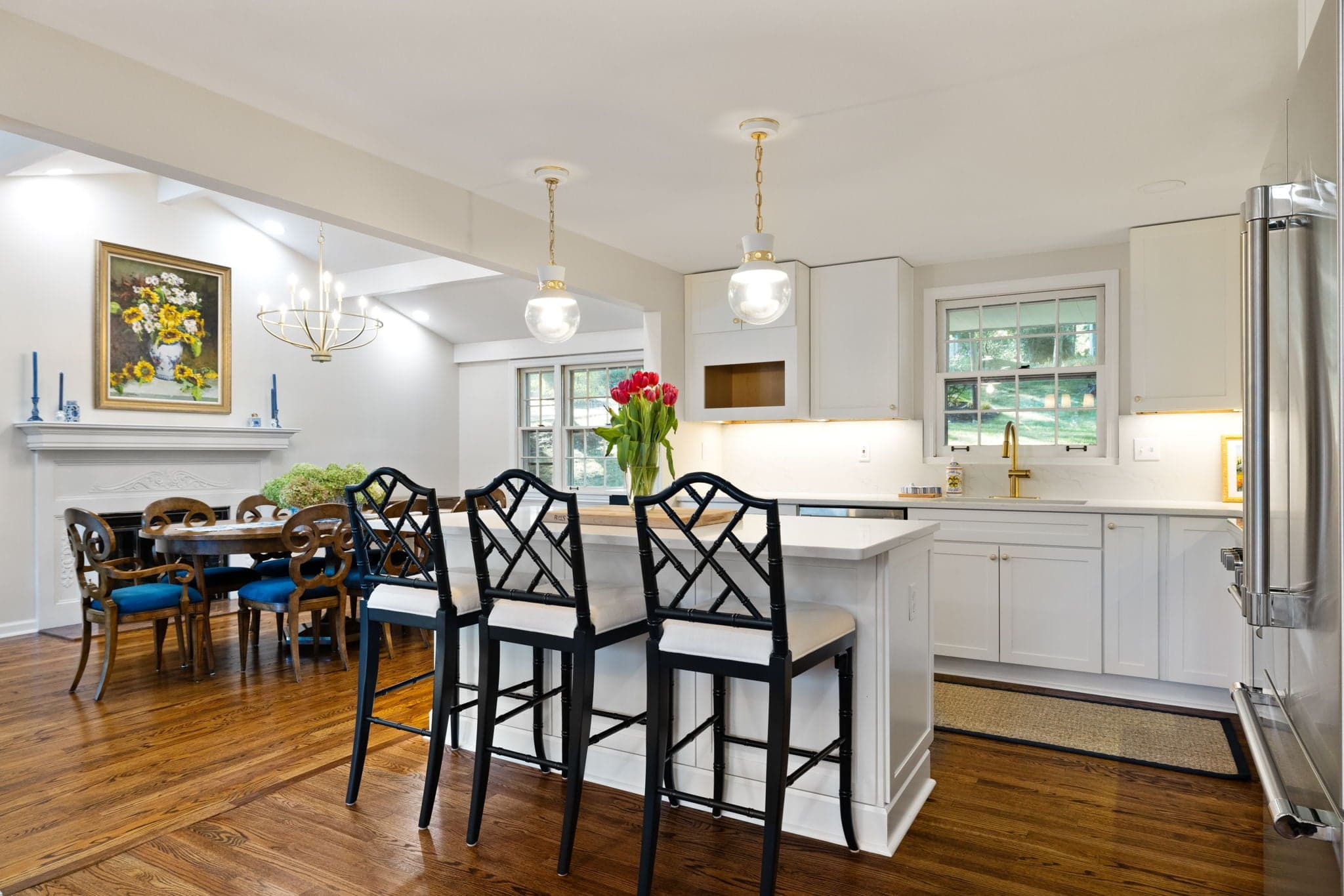
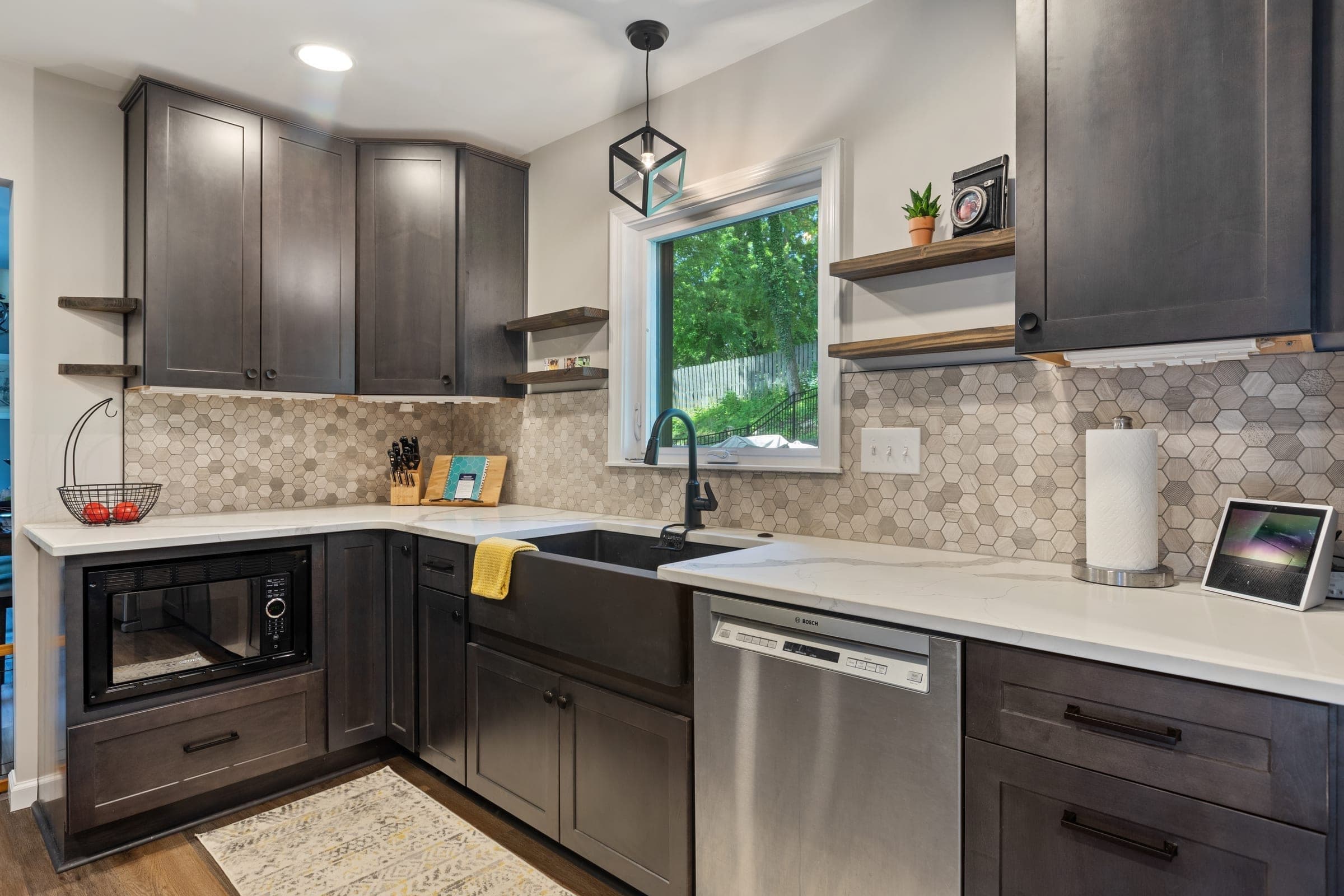
See how we built it.
Related reading.
A Kitchen Remodel, Week by Week
Demo, rough-ins, inspection, drywall, cabinets, template, counters, trim, punch list — the real order of operations on a four-to-seven-week Pittsburgh kitchen, drawn from four completed projects. Including the two stretches where you will walk through and see nothing happening, why neither one can be compressed, and the shortcut that ruins a backsplash.
Finishing a Basement in an Old Pittsburgh House
Both basements we have published are in newer houses, and that is exactly the comparison worth making. What a stone foundation, a low duct run, and eighty years of retrofitted mechanicals do to a basement project, the two free checks that tell you whether yours is a candidate at all, and why a partial finish is often the smarter plan rather than a compromise.
Last Call for Concrete and Deck Work Before Winter
There is no single cutoff for outdoor work in Pittsburgh, there are three. Stamped concrete has the earliest deadline and it is the seal thirty days after the pour, not the pour itself. Pavers depend on ground that will take compaction. Decks run latest and composite runs latest of all. What we will still build in October, and what we will tell you to put off until spring.