
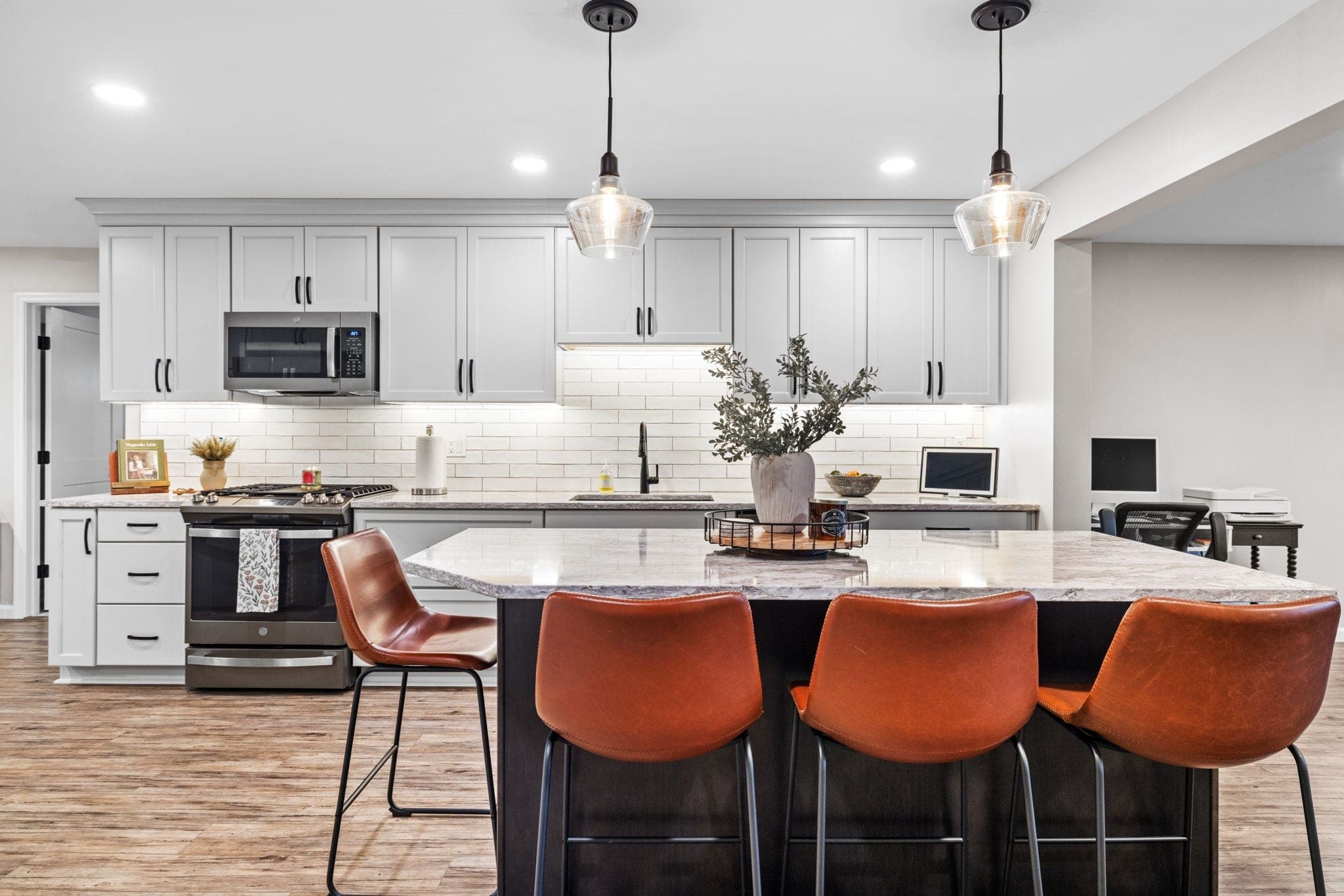
ICR additions project
Services

Additions in Pittsburgh

Dormers, rear additions, second-story adds — engineered and permitted in-house.

Our Approach

How we think about additions.

An addition has to look like it always belonged. That means matching the roofline, picking up the exterior trim language, and stepping down the mass so the new square footage reads as an evolution of the house, not a tumor bolted to it.

Investment Range
$120K – $600K
Typical Duration
14–28 weeks on site
Investment by Scope

What it costs, by how deep we go.

Three real cost tiers for a additions project of typical size at mid-range finish level. Use the investment range tool to refine for your specific size and selections — every project is different, and so is every quote we issue.

Same layout, new finishes.

Cosmetic Refresh

$85K $169K
Medium / Mid-Range

Paint, fixtures, hardware, light cabinetry updates. The fastest path to an updated addition without a structural project.

  • Paint, hardware, fixtures
  • Lighting and plumbing fixture swap
  • Existing cabinetry kept or refaced
  • Minimal disruption — typically 2–4 weeks
Refine the range
New cabinetry and finishes, existing footprint.

Standard Remodel

$154K $308K
Medium / Mid-Range

New cabinetry, counters, tile, and fixtures within the current footprint. Light electrical and plumbing updates as required by code. The most common scope we run for additions.

  • New cabinetry, counters, tile, fixtures
  • Code-compliant electrical and plumbing updates
  • Lighting plan and ventilation upgrade
  • Same footprint — no structural work
Refine the range
Walls moved, plumbing relocated, structural rework.

Full Gut & Reconfigure

$231K $462K
Medium / Mid-Range

Down to studs. Walls relocated, plumbing rerouted, structural changes engineered and permitted. The deepest renovation — and the highest ceiling on what the room can become.

  • Structural drawings + permits
  • Walls moved, plumbing relocated
  • Full electrical re-run and panel upgrade if needed
  • All-new cabinetry, surfaces, mechanicals
Refine the range

Ranges shown are planning numbers — not quotes. The actual number for your home depends on what we find behind the walls, your specific selections, and the geometry of the existing space. The conversation starts with a 30-minute walk-through.

What’s Included

Everything labor
and material.

  • Structural engineering and stamped drawings
  • Permit procurement end-to-end
  • Foundation work (footer, wall, or slab)
  • Framing tied into existing structure with engineered connections
  • Roofing and siding matched to existing
  • Full interior finish to match or exceed adjacent rooms
  • HVAC load recalc and zoning updates
Where We Work

Additions in your
neighborhood.

We’ve built additions across the South Hills and greater Pittsburgh. Click any area for the full local guide — housing stock, permitting, common challenges, and recent projects.

Frequently Asked

Questions we hear
every week.

Do I need an architect for an addition?+
For a simple dormer or single-room bump, our in-house team handles the design and engineering. For second-story adds or additions over 600 sqft, we recommend an architect — we have two we work with regularly.
How do you handle tying into the existing house?+
Carefully. We open up exterior walls in small sections, match existing framing connections with engineered hardware, and re-flash to preserve the building envelope. The tie-in is where cheap builders fail — it’s where we spend our time.
Will my HVAC keep up?+
Only if we recalc the load and address it. Most additions require either a new zone, a ductless head, or in larger cases, a second system. We do this calculation in design phase, not as a surprise later.
What about variance or zoning issues?+
We handle the zoning research before we design. If you need a variance, we’ll walk it through with the municipality — but we’ll also tell you honestly if your scope isn’t likely to be approved.

Ready to talk about
your additions?