
Building Permits in Pittsburgh and the South Hills: Same Project, Different Town
Two identical additions a mile apart can go through completely different permit worlds — a 24/7 cloud portal in one town, paper forms and a staff notary in the next, a private inspection firm in a third. How seven Pittsburgh-area municipalities actually handle permits and inspections in 2026.
Quick Take: There is no such thing as "a Pittsburgh building permit." Every municipality runs its own process under Pennsylvania's Uniform Construction Code, and the experience varies wildly: Mt. Lebanon and Peters Township have modern online portals where you apply, pay, and request inspections from your phone; Upper St. Clair and Green Tree still run on paper forms and phone calls; Whitehall outsources its plan review and inspections to a private firm; and the City of Pittsburgh requires most permits to be pulled by a city-licensed contractor through its OneStopPGH platform. Your address — not your project — decides which world you're in.
Here's a thing nobody tells you when you start planning a renovation: the exact same project — same drawings, same scope, same budget — goes through a completely different permitting experience depending on which side of a municipal line your house sits. We pull permits across the South Hills and the city every month, and the contrast is genuinely strange. In Mt. Lebanon, we request an inspection from a phone in the truck and everyone tied to the permit gets the result by email. One town over in Upper St. Clair, the application is a paper form — and the township keeps a notary on staff to help you sign it.
Neither of those is wrong. But if you don't know which system your town runs, you can't plan your timeline — and you can't tell whether a delay is normal or a problem. So here is the honest map, town by town, as of mid-2026.
The seven systems at a glance
| Municipality | How you apply | Inspections | Worth knowing |
|---|---|---|---|
| Mt. Lebanon | Online — Municity Connect portal (via MyLebo) | Requested in the portal; results emailed to everyone on the permit | Residential permits targeted within 15 business days |
| Peters Township | Online — SDL permit portal | Portal or phone, 48-hour notice | Washington County, not Allegheny; some inspections by approved third-party agencies |
| Bethel Park | PDF packet by email or in person | Phone/email to the municipal inspector | Inspections handled in-house by municipal staff |
| Upper St. Clair | Paper forms, in person | By phone | Notary on staff for applications; sewer-lateral rules via Allegheny County Health Dept. |
| Whitehall | Paper, at the borough office | Directly with the borough's third-party inspector, 24-hour notice | Zoning approval first, then plan review by a private inspection firm (BIU of PA) |
| Green Tree | Paper — call the code official first | By phone | Two copies of survey + drawings required; dye testing rules for sewer laterals |
| City of Pittsburgh | Online — OneStopPGH | Scheduled in OneStopPGH | Most permits must be pulled by a PLI-licensed contractor; historic districts add a review layer |
Read down that middle column and you can see the spectrum: from a code official who answers the phone himself in Green Tree, to a full enterprise permitting platform in the city. Here's what each one actually feels like on a real project.
The digital end: Mt. Lebanon, Peters Township, and the city
Mt. Lebanon — the cloud portal
Mt. Lebanon runs its permitting and inspections on Municity, reached through the municipality's MyLebo resident portal. Apply, upload drawings, pay fees, request inspections, and watch the review happen — 24/7, from anywhere. When an inspector closes out an inspection, the result goes by email to everyone tied to the permit: homeowner, contractor, architect. We wrote a full walkthrough of it in our Mt. Lebanon permit guide, including the municipality's 15-business-day residential target and the first-Wednesday in-person help sessions.
Peters Township — a portal, and a different county
Peters Township also runs a modern online portal (built on SDL) — submit, track, and schedule through it, or phone inspections in with 48 hours' notice. The twist most people miss: Peters is in Washington County, not Allegheny. Septic and sewage questions answer to a different authority than every other town on this list, and certain inspections — electrical and energy compliance among them — are performed by approved third-party agencies rather than township staff. Same modern front door, different machinery behind it.
City of Pittsburgh — the enterprise platform, with a gate
The city's Department of Permits, Licenses, and Inspections (PLI) runs everything through OneStopPGH — permits, plan review, inspections, payments, all online. It's the most capable system on this list, and the one with the most rules. Two stand out. First, most building permits must be applied for by a PLI-licensed contractor — homeowners can self-apply only for an owner-occupied one- or two-family home with no hired employees on the work. Second, if your house sits in one of the city's designated historic districts, exterior work needs a Certificate of Appropriateness before the building permit moves — a separate review with its own clock. A Squirrel Hill or Shadyside renovation can be straightforward, but the sequencing matters far more than in the suburbs.
The traditional end: Upper St. Clair, Bethel Park, Green Tree
Upper St. Clair — paper, in person, surprisingly personal
USC's building permit applications are PDF forms, submitted to the Community Development office on McLaughlin Run Road, with inspections phoned in. Before you roll your eyes: there's a version of this that's genuinely pleasant. The township recommends calling before you apply — a human walks you through what your project needs — and they keep a notary on staff, free, for the applications that require one. It's a counter-service model, and it works; it just means your contractor is making calls and visits instead of clicking buttons, and the timeline depends on complete paperwork the first time. One more USC particular: sewer-lateral requirements run through the Allegheny County Health Department, which matters on additions and major renovations.
Bethel Park — the email-a-PDF middle ground
Bethel Park sits between worlds: download the permit packet, then email it to the permits office or drop it at the municipal building on West Library Avenue. No real online portal, but no counter trip required either. Inspections are scheduled directly with the municipality's own inspectors — in-house staff, not a third party — which tends to make scheduling conversational: you talk to the same people for the life of the project.
Green Tree — call the code official first
The smallest-borough version of the process, and the most personal. Green Tree asks you to start with a phone call to the building code official to talk through whether your project even needs a permit — their exemption list is broader than people expect (like-for-like cabinet and floor replacement, siding, gutters, same-size windows: no permit). When you do need one, it's a paper application with two copies of your property survey and two copies of the construction drawings. And Green Tree has a quirk worth knowing about: sewer-lateral dye-testing requirements that surface during construction and property transfers.
The outlier: Whitehall, where the inspector doesn't work for the borough
Here's the arrangement almost no homeowner knows exists. Whitehall, like a number of small Pennsylvania boroughs, doesn't employ its own building plan reviewers and inspectors — it contracts that work to a private, state-certified inspection agency (Building Inspection Underwriters of Pennsylvania). The process is two-step: the borough's zoning review comes first, then the plans go to BIU for the building review, and you pick up and pay for the approved permit at the borough office. Inspections get scheduled directly with the BIU inspector, with 24 hours' notice. It works fine — BIU does this for boroughs all over the region — but it means your "town inspector" is a contractor too, with a route covering many municipalities. Scheduling around that is the kind of thing a builder who works there regularly already knows how to do.
What this means for your timeline
Three practical takeaways from the spectrum:
- Don't transplant a neighbor's timeline. "My sister's kitchen permit in Mt. Lebanon took two weeks" tells you nothing about your project in Whitehall, where zoning review and a third-party plan review run in sequence — or in the city, where a historic district can add a review cycle before the permit clock even starts.
- The constant across every town is the same: complete applications move, incomplete ones loop. Whether the reviewer is a cloud platform or a person at a counter, a missing survey copy or an unstamped structural drawing is what actually blows a schedule. The system is rarely the bottleneck; the submission is.
- Budget the permit phase by municipality, not by project type. When we scope work, the permitting plan is town-specific from day one — who reviews it, in what order, how inspections get scheduled, and what the realistic calendar looks like. That's not bureaucratic trivia; it's the difference between a project that starts when we said it would and one that sits in a review loop.
Common questions
Is the building permit process the same in every Pittsburgh suburb?
No. Every municipality administers Pennsylvania's Uniform Construction Code its own way. Some run online portals (Mt. Lebanon, Peters Township, the City of Pittsburgh), some are paper-based (Upper St. Clair, Green Tree), some accept applications by email (Bethel Park), and some outsource plan review and inspections to private agencies (Whitehall). The codes are consistent; the process is not.
Which Pittsburgh-area municipalities let you apply for permits online?
Of the towns we work in most: Mt. Lebanon (Municity Connect via MyLebo), Peters Township (SDL portal), and the City of Pittsburgh (OneStopPGH) offer true online application, payment, and inspection scheduling. Bethel Park accepts applications by email. Upper St. Clair, Whitehall, and Green Tree are paper and phone.
Do I need a licensed contractor to pull a permit in the City of Pittsburgh?
In most cases, yes — city building permits must be applied for by a contractor licensed with the Department of Permits, Licenses, and Inspections. The exception is an owner-occupant of a one- or two-family home doing the work without hired employees. In the suburbs, homeowners can generally apply for their own permits, though contractors usually handle it.
Who inspects renovation work in Whitehall?
A private, state-certified third-party agency — Building Inspection Underwriters of Pennsylvania — handles building plan review and inspections under contract with the borough. Zoning is reviewed by the borough first, then plans go to BIU. Inspections are scheduled directly with the BIU inspector with 24 hours' notice.
Does Peters Township follow Allegheny County rules?
No — Peters Township is in Washington County. Building permits run through the township's own online portal, and sewage/septic matters fall under Washington County authorities rather than the Allegheny County Health Department, which governs those issues in the South Hills towns north of it.
How long does a building permit take in the Pittsburgh area?
It varies by municipality and scope. Mt. Lebanon publishes a 15-business-day target for residential building permits; most area municipalities land in a similar two-to-four-week window for a complete residential application, with structural work requiring engineered drawings running longer. The biggest variable in every town is the same: whether the application is complete the first time.
Where this leaves you
The point of this map isn't that one town does it right and another doesn't — it's that the permit phase of your renovation is local in a way almost nothing else about construction is. The materials are the same in every zip code. The process that lets you install them is not. If you're planning an addition or a structural renovation anywhere on this list, we handle the permitting town by town — the right forms, the right sequence, the right person to call — and keep you looped in the whole way. Start with our investment range tool for a realistic budget, read the Mt. Lebanon deep dive if that's your town, or book a consultation and we'll walk the whole path with you.
Our additions renovation page →
Dormers, rear additions, second-story adds — engineered and permitted in-house.
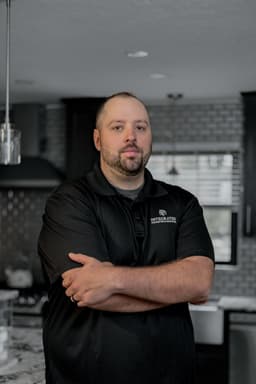
Jordan Kelly is a co-owner and co-founder of Integrated Contracting & Renovations. A Pittsburgh native with an accounting degree from Saint Francis University, he has spent more than 15 years in Pittsburgh real estate and focuses on the numbers behind a renovation — what projects cost, what they return, and how homeowners finance them.
Related reading.
"General Contractors Near Me": How to Actually Vet the Ones You Find
Searching "general contractors near me" gives you a map full of pins and no way to tell them apart. Here's what "near me" should really mean in the Pittsburgh area, the questions that separate a real contractor from a good salesperson, and the red flags worth walking away from.
Hiring a Kitchen Contractor in Pittsburgh: What Actually Matters
The kitchen is the most trade-dense room in the house, which makes it the hardest room to hire for. What separates a real kitchen contractor from a cabinet installer, why opening a wall in an older Pittsburgh home is a structural question, what the work actually costs here, and how to vet the people you find.
Basement Waterproofing in Pittsburgh: Signs, Fixes, and What It Costs
How to read the signs of a basement water problem, why Pittsburgh basements are especially prone to it, the fixes that actually work, and the honest answer on cost — plus why waterproofing always comes before finishing.