
Basement Waterproofing in Pittsburgh: Signs, Fixes, and What It Costs
How to read the signs of a basement water problem, why Pittsburgh basements are especially prone to it, the fixes that actually work, and the honest answer on cost — plus why waterproofing always comes before finishing.
Quick Take: Pittsburgh basements get wet — old housing stock, clay-heavy soil, and a spring rain pattern that concentrates much of the year's water into a few weeks all work against a dry foundation. The good news is that water in the basement is a solvable problem, and most fixes target one of a handful of root causes: where the water comes from outside, and how it gets out from inside. The non-negotiable rule is sequence: you waterproof first, then you finish. Framing and drywall over a damp foundation is the single most expensive mistake we see in basement projects. This guide covers the signs, why they're common here, the fixes that work, and an honest answer on cost — which depends on the cause and is best answered by an on-site look, not a number off a webpage.
The signs you have a water problem
A basement rarely floods out of nowhere. It tells you first. The most common signals we walk homeowners through:
- Efflorescence — chalky white mineral deposits on the foundation walls or floor. It's left behind when water moves through masonry and evaporates, so it's a reliable fingerprint that moisture is passing through the wall, even if you've never seen standing water.
- A musty smell that doesn't air out. That basement-y odor is microbial growth feeding on damp organic material. If the space still smells musty after a few dry days with the windows open, the moisture is ongoing, not leftover.
- Staining and discoloration — water lines on the wall, darkened concrete at the base of the foundation, rust streaks on metal, or warped material stored on the floor.
- Spring seepage. A floor or wall that's dry most of the year but weeps during the spring thaw and heavy rain. This is the classic Pittsburgh pattern, and it's the one most often missed because the basement looks fine in August when people are planning to finish it.
- A sump pump that runs constantly — or one that's overwhelmed during storms. Frequent cycling tells you how much water is actually arriving at the foundation.
Any one of these is worth investigating before you spend money on the space. Several together mean waterproofing comes before anything else.
Why Pittsburgh basements are prone to it
This isn't bad luck — it's the combination of how the region is built and how the weather behaves.
- Heavy, concentrated rain. Pittsburgh averages roughly 38 inches of rain a year, and a large share of it lands in spring. A foundation that drains fine in a light shower can be overwhelmed when weeks of rain stack up — which is exactly when seepage shows.
- Clay-heavy soil. Much of the area sits on dense clay that drains slowly and holds water against the foundation rather than letting it move away. Saturated soil presses water through hairline cracks and porous block under hydrostatic pressure.
- Older homes. A lot of the housing stock here predates modern foundation waterproofing — block walls, original mortar joints, and exterior coatings that have long since aged out. Hillside lots and homes built into a slope add their own drainage challenges.
Put together, it means a wet basement in this region is common and usually fixable — not a sign your house is failing.
Waterproofing vs. finishing: why the order matters
These are two different projects, and they have to happen in the right order. Waterproofing is about keeping water out and managing the water that does arrive. Finishing is converting the raw space into livable, permitted rooms — framing, insulation, drywall, flooring. The temptation is to skip straight to the fun part.
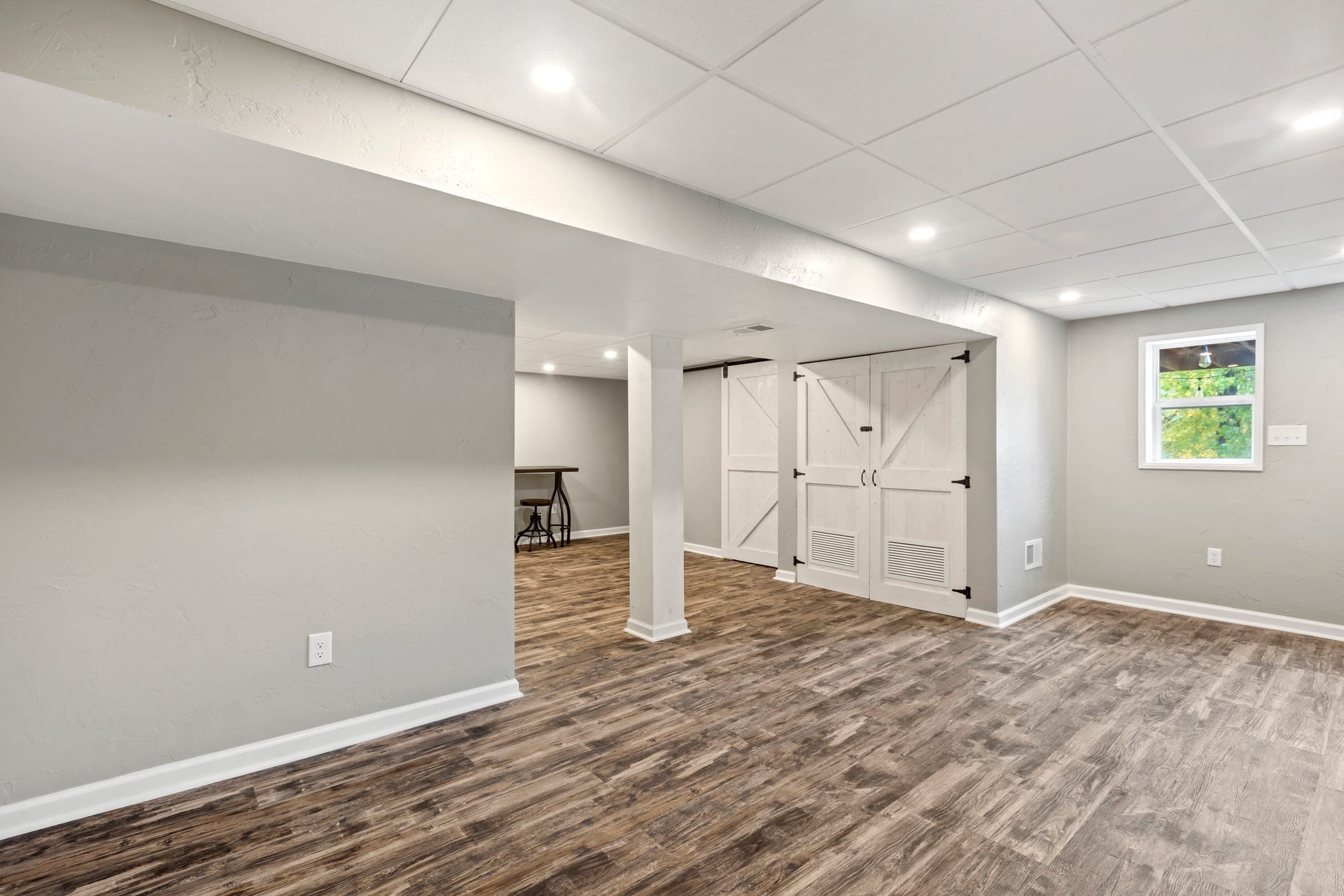
Don't. Framing walls and hanging drywall over a foundation that still takes on moisture traps that water inside the assembly. Within a year or two you're looking at mold, rot, and a tear-out that costs more than the original finish did. We cover this same warning from the finishing side in our basement finishing guide — the moisture assessment is step one there for exactly this reason. Our Varner Road basement in Whitehall is a good example of doing it in order: an interior French drain went in before a single wall was framed, and the finished space has stayed dry.
The fixes that actually work
The right fix depends on where the water is coming from and how it's getting in. Most projects use one or a combination of these:
- Grading and downspouts (start here). A surprising amount of basement water is just roof and surface water dumped next to the foundation. Extending downspouts well away from the house and re-grading the soil to slope away are the cheapest, highest-leverage fixes — sometimes they're the whole solution.
- Interior drain tile and a sump pump. The workhorse of basement waterproofing here. A perforated drain line set in the perimeter of the slab collects water that reaches the footing and routes it to a sump pit, where the pump sends it outside. This manages water that's going to arrive no matter what you do outside.
- Crack injection. For poured-concrete walls with a specific leaking crack, injecting polyurethane or epoxy seals it from the inside. Targeted, relatively contained, and effective for the right problem.
- Exterior membrane and drainage. The most involved option — excavating to the foundation, sealing the wall with a waterproof membrane, and installing exterior footing drainage. It addresses water before it ever reaches the wall, but the excavation makes it the most disruptive and the most expensive approach.
A good contractor diagnoses the source before prescribing the fix. Selling you an exterior dig when corrected grading would have solved it is as wrong as papering over a real foundation problem with a coat of sealer.
What it costs — the honest answer
Here's where we won't pretend. Waterproofing cost depends almost entirely on the cause and the scope, and the spread between "extend the downspouts and re-grade" and "excavate the exterior and install a membrane" is enormous. We don't publish waterproofing prices on this site, because a number without a diagnosis is worse than no number — it sets the wrong expectation in both directions.
What we can tell you is what drives the cost:
- The source and severity — surface water vs. hydrostatic pressure through the walls.
- Interior vs. exterior work — exterior excavation is the most labor- and equipment-intensive path by a wide margin.
- Linear footage of drain tile or wall treated.
- Sump and discharge — a new pit, a backup pump, and where the water can legally discharge.
- Access and finishes — an already-finished basement that has to be partially opened up costs more than bare block.
For context on the finishing side, our basement finishing guide does publish 2026 finishing ranges — and it explicitly lists "waterproofing work needed before finishing" as a cost driver on top of those numbers. If you're budgeting a finished basement, treat waterproofing as a separate, prior line item. The only honest way to price your situation is to have someone look at it: start with our investment range tool, or book a walk-through and we'll diagnose the source before we talk dollars.
Common questions
How do I know if my basement actually has a water problem?
Look for the signs: chalky white efflorescence on the walls, a musty smell that doesn't air out, staining or water lines, seepage during spring rain, or a sump pump that runs constantly. Any one of these is worth investigating before you invest in the space; several together mean you should waterproof before doing anything else.
Why are Pittsburgh basements so prone to water?
Three things stack up: the region averages roughly 38 inches of rain a year with much of it concentrated in spring, the soil is clay-heavy and drains slowly so it holds water against the foundation, and a lot of the housing stock is old enough to predate modern foundation waterproofing. A wet basement here is common and usually fixable, not a sign the house is failing.
Do I need to waterproof before finishing my basement?
Yes. Waterproofing and finishing are two separate projects, and waterproofing comes first. Framing and drywalling over a foundation that still takes on moisture traps water inside the walls and leads to mold, rot, and a tear-out within a year or two. Confirm the basement stays dry — or make it dry — before any finish work begins.
What's the most common waterproofing fix?
For interior work, an interior drain tile system paired with a sump pump is the workhorse — it collects water that reaches the footing and pumps it out. But the cheapest and highest-leverage starting point is often outside: extending downspouts away from the house and re-grading so surface water drains away from the foundation. The right fix depends on where the water is coming from.
What does basement waterproofing cost in Pittsburgh?
It depends heavily on the cause and scope — corrected grading and downspouts sit at one end, full exterior excavation and a membrane at the other — so we don't publish a single price. Cost drivers include the source and severity of the water, interior vs. exterior work, the linear footage treated, sump and discharge needs, and access. The honest way to price your situation is an on-site assessment; start with our investment range tool or book a walk-through.
Can you fix the water problem and finish the basement together?
They're done in sequence on the same project — waterproof first, confirm the space stays dry, then finish. On our Varner Road basement in Whitehall, an interior French drain went in before any wall was framed, and the finished rec room, bath, and guest suite have stayed dry. That order is the whole point.
Our basements renovation page →
Moisture-first basement finishing — code-compliant, built to last.

Jordan Kelly is a co-owner and co-founder of Integrated Contracting & Renovations. A Pittsburgh native with an accounting degree from Saint Francis University, he has spent more than 15 years in Pittsburgh real estate and focuses on the numbers behind a renovation — what projects cost, what they return, and how homeowners finance them.
See how we built it.
Related reading.
"General Contractors Near Me": How to Actually Vet the Ones You Find
Searching "general contractors near me" gives you a map full of pins and no way to tell them apart. Here's what "near me" should really mean in the Pittsburgh area, the questions that separate a real contractor from a good salesperson, and the red flags worth walking away from.
Hiring a Kitchen Contractor in Pittsburgh: What Actually Matters
The kitchen is the most trade-dense room in the house, which makes it the hardest room to hire for. What separates a real kitchen contractor from a cabinet installer, why opening a wall in an older Pittsburgh home is a structural question, what the work actually costs here, and how to vet the people you find.
Basement Remodeling in Upper St. Clair: How to Finish One Right
Upper St. Clair's 1960s–90s splits and colonials were built with the raw basement already there, which makes them prime candidates to finish. The honest version of the project — water first on USC's sloped lots, real egress, and the township's paper-and-phone permit process.