The answer usually comes down to your yard's terrain — and Pittsburgh has more to say about that than most cities.
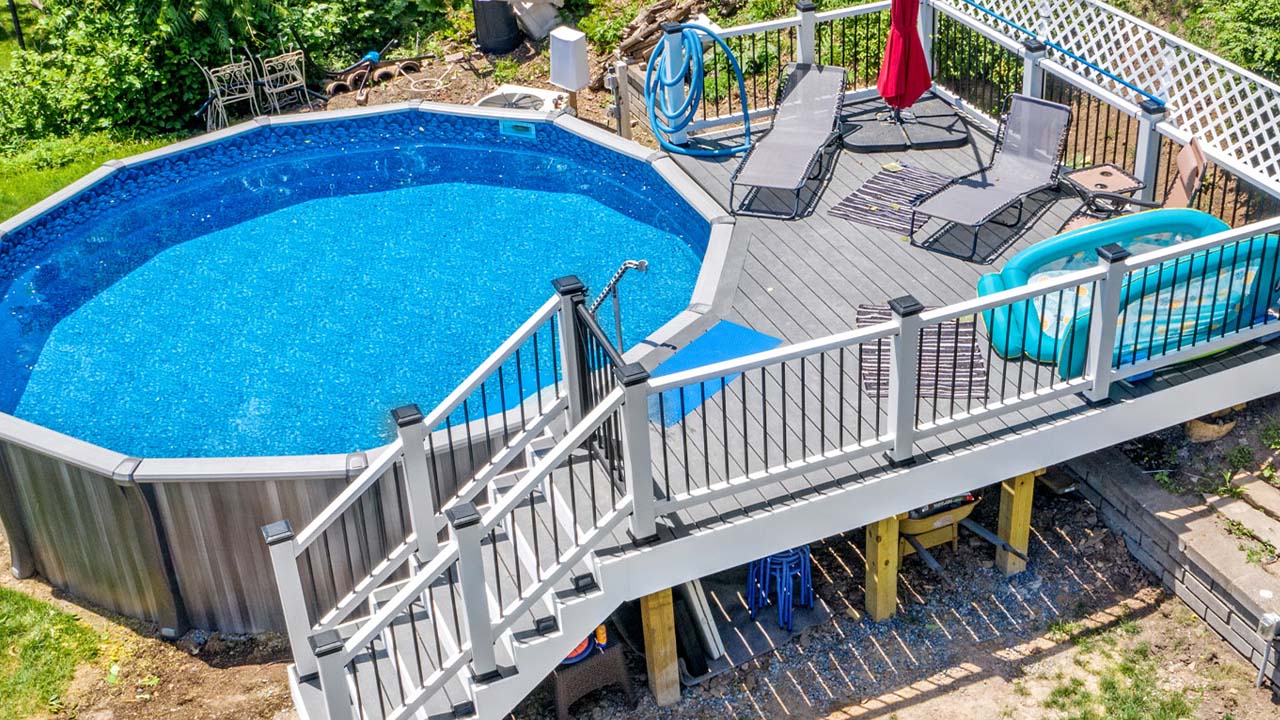
Every spring, Pittsburgh homeowners start the same conversation: deck or patio? Both give you outdoor living space. Both add value. Both work well for entertaining. But they're built differently, cost differently, and suit different yards — and in the South Hills, where most lots have some kind of grade change, the choice often gets made for you by the land itself.
This guide breaks down when each option makes sense, what each costs in Pittsburgh, and what to think through before committing.
Quick Take: Decks work better on sloped or elevated lots. Patios work better on flat or near-flat ground. If your backyard drops away from the house, a deck is almost always the more practical answer. If your yard is relatively level, a patio usually gives you more usable space for less money.
A deck is a raised platform built on a frame and posts. It attaches to the house and sits above grade — meaning above the ground level. Decks are the right answer when the ground isn't level with your door, or when you want the space to be at the same height as your interior floor.
A patio is a ground-level hardscaped surface — concrete, pavers, flagstone, or a combination. It sits directly on the ground and is the right answer when you have a flat or gently sloped yard and want a low-maintenance, solid surface.
The distinction matters more in Pittsburgh than in flat-terrain cities because of the topography. Hilly lots in Upper St. Clair, Mt. Lebanon, Bethel Park, and Scott Township often have back doors that open to 4–10 feet of air above the yard. In those cases, a deck isn't just a preference — it's often the only option that makes sense without major earthwork.
If your backyard drops away from the house, building a patio at ground level means the patio is several feet below your door — requiring stairs and making the space feel disconnected from the interior. A deck extends the living floor level directly from the house and sits above the grade change. This is the most common reason Pittsburgh homeowners choose decks.
Decks that are flush with the interior floor create a seamless indoor-outdoor flow. You walk from your kitchen or living room directly onto the deck without stepping down. This is especially useful if you're adding an outdoor dining area or want a space that feels like an extension of the house rather than a separate feature.
A raised deck creates usable under-deck storage space. Some homeowners enclose it for equipment storage. Others leave it open for a dry storage area. On sloped lots, the space under a deck can be significant — 8 to 10 feet of clearance in some cases — enough for a small covered patio or workshop.
Elevated decks with significant post height cost more because of the structural requirements. A deck 8+ feet off the ground needs larger posts, footings, and more framing material than one that's 2 feet above grade.

When your back door opens close to grade level, a patio is the simpler, often less expensive option. There's no framing, no posts, no ledger board attachment to the house — just excavation, base prep, and surface installation. For a straightforward flat lot, patios give you more square footage for the same budget.
Wood decks need periodic staining or sealing to hold up through Pittsburgh winters. Composite decking is low maintenance but not zero maintenance. A concrete or paver patio, properly installed, needs very little upkeep — occasional cleaning and joint sand replacement for pavers, and that's about it. If you don't want to think about the space between seasons, a patio usually wins.
Per square foot, patios are generally cheaper than composite decks. A 600 sq ft paver patio typically costs less than a 600 sq ft composite deck. If square footage matters more than elevation, a patio delivers more space for the same investment.
Patios integrate with landscaping in ways decks don't. You can build planting beds into the edges, incorporate retaining walls into the design, add a fire pit at grade, or transition from patio to lawn seamlessly. Patios feel more like part of the yard; decks feel more like part of the house.
Pittsburgh averages around 30 freeze-thaw cycles per year. This is the main reason patio material selection matters here more than in warmer climates. Concrete patios can crack over time without proper installation — control joints, adequate base depth, and quality mix matter. Paver patios handle freeze-thaw well because individual pavers can shift and be re-leveled; they don't crack the way poured concrete does.
Decks are affected too — wood expands and contracts seasonally. Composite decking handles this better than pressure-treated lumber, which is one reason it's become the dominant choice for Pittsburgh deck builds over the last decade.
Whether you build a deck or a patio, water management needs to be part of the plan. Patios need to slope away from the house (minimum 1/8 inch per foot). Decks need boards gapped properly for drainage and proper flashing at the ledger. Both need to direct water away from the foundation. This is often where contractor quality shows — a good install accounts for drainage from the start.
Any deck in Allegheny County municipalities requires a building permit. Attached patios over a certain size may also require permits depending on your municipality. Your contractor handles permit applications as part of the project. Don't skip this — unpermitted decks are flagged at resale and can require costly remediation.
Both add value. Neither is dramatically better than the other at resale for most Pittsburgh buyers. What matters more is quality of construction and whether the space actually functions well.
A composite deck on a sloped lot adds more value than a ground-level patio on the same lot — because the deck is what makes the yard usable. A quality paver patio on a flat lot may return more than a basic pressure-treated deck on the same property because of the longevity difference.
The rough rule: outdoor living additions return 60–80% at resale in the Pittsburgh market. Higher-quality materials tend to recover better. Either option, done well, is a sound investment.
What's less maintenance: deck or patio?
A paver or concrete patio requires less ongoing maintenance than a wood deck. Composite decking is low maintenance but still needs cleaning and occasional inspection. If minimizing upkeep is the priority, a patio wins — especially a paver patio where individual sections can be reset without replacing the whole surface.
Can I have both a deck and a patio?
Yes, and it's a popular approach on sloped lots. The deck sits at door level and provides a space for dining or entertaining adjacent to the house. Stairs lead down to a lower-level patio that expands the usable yard space, often with a fire pit or seating area. The two levels create distinct outdoor zones and make the most of a sloped property.
Which is better for entertaining?
Both work well. Decks that are level with the interior floor make indoor-outdoor entertaining seamless — guests flow naturally between spaces. Patios that are level with the yard integrate better with lawn activities and typically offer more open space. If you entertain with large groups, a patio usually gives you more total square footage for the budget.
How long does a deck vs. patio last in Pittsburgh?
Pressure-treated lumber: 15–25 years with maintenance. Composite decking: 25–30+ years. Concrete patio: 25–50 years depending on installation quality and freeze-thaw management. Paver patio: 30–50+ years — individual pavers can be replaced indefinitely. Flagstone: similar to pavers with proper installation. Composite decking and pavers are the two options with the best longevity-to-cost ratio for Pittsburgh's climate.
Do I need a permit for a patio in Pittsburgh?
It depends on the municipality and the patio's specs. Most detached ground-level patios under a certain size don't require a permit. Attached structures, patios over a certain square footage, or patios that include walls or roofing typically do. Your contractor will know the requirements for your specific township and pull the appropriate permits.
Planning to add an outdoor kitchen alongside your deck or patio? See our complete outdoor kitchen guide for Pittsburgh homeowners — layouts, costs, and what to build first. Or if you're thinking about expanding the home itself, our home additions guide covers what it costs to add interior square footage alongside outdoor improvements.
Get a detailed estimate for your Pittsburgh deck or patio project from Integrated Contracting & Renovations.
Get In Touch